Head shape concerns are more common than most parents realize — studies suggest up to
1 in 2 infants
may develop some degree of flattening during infancy.
Deformational Plagiocephaly - also known as flat head syndrome (FHS) - is an abnormal shape of the baby’s head that results from many factors - these factors may be present before and/or after birth. Parents, family members, friends and other health care professionals may notice the head to be asymmetrical or disproportional rather than oblong and round. These altered head shapes are very common and studies estimate 1 in 10 babies have a misshapen head that requires further assessment and treatment.
What is deformational plagiocephaly?
What causes deformational plagiocephaly?
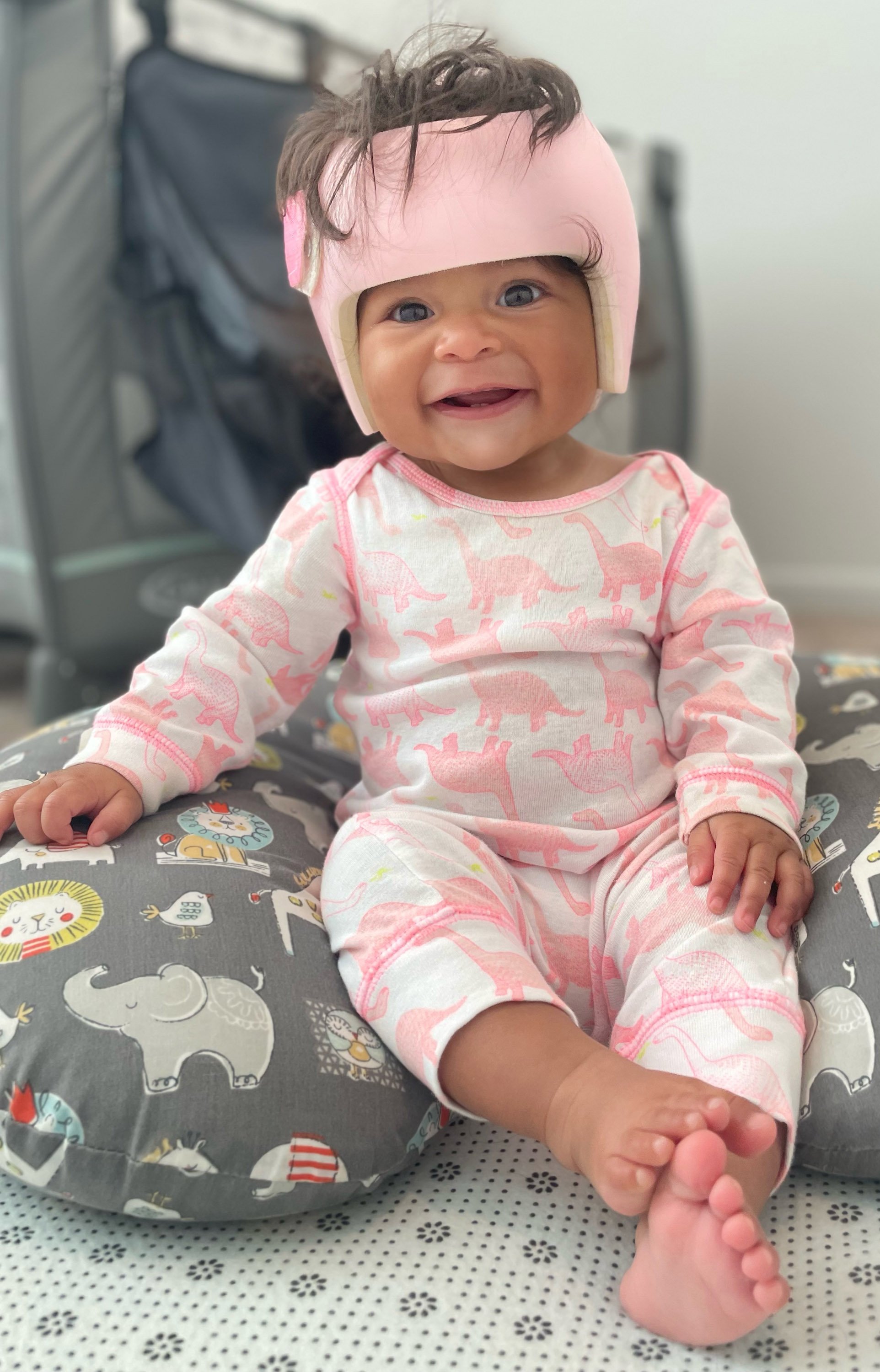
Deformational head shapes are caused by many factors such as a restrictive in utero environment, prematurity and delayed development, neck muscle weakness or imbalance, back sleeping, low tone, assisted birth delivery methods, infant carriers and infant safety devices. Even the process of natural childbirth results in distortions of the very soft infant skull. After birth, many children have preferred head and trunk postures where they are content to lay and sleep with limited head movement. By six to eight weeks of age, normal physical development and movement should help change the appearance of the head towards a more normal shape. If the shape does not improve, then it’s a good topic to bring up and discuss at the next visit with your pediatrician.
What head shapes require further assessments?
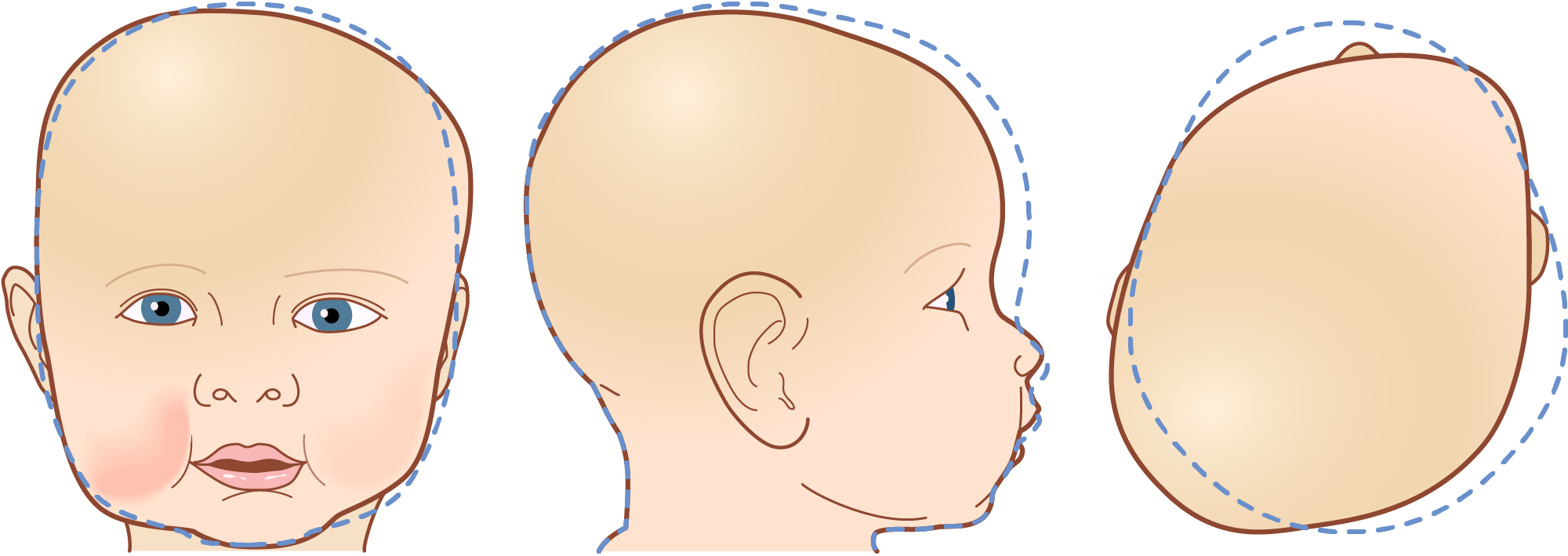
Deformational Plagiocephaly
The most common type of head shape asymmetry
Deformational plagiocephaly is characterized by flattening on one side of the back of the head, creating an asymmetrical head shape. You may also notice one ear positioned slightly forward or subtle forehead prominence on the same side. This condition is often caused by consistent pressure on one area of the skull and/ or torticollis (neck tightness).
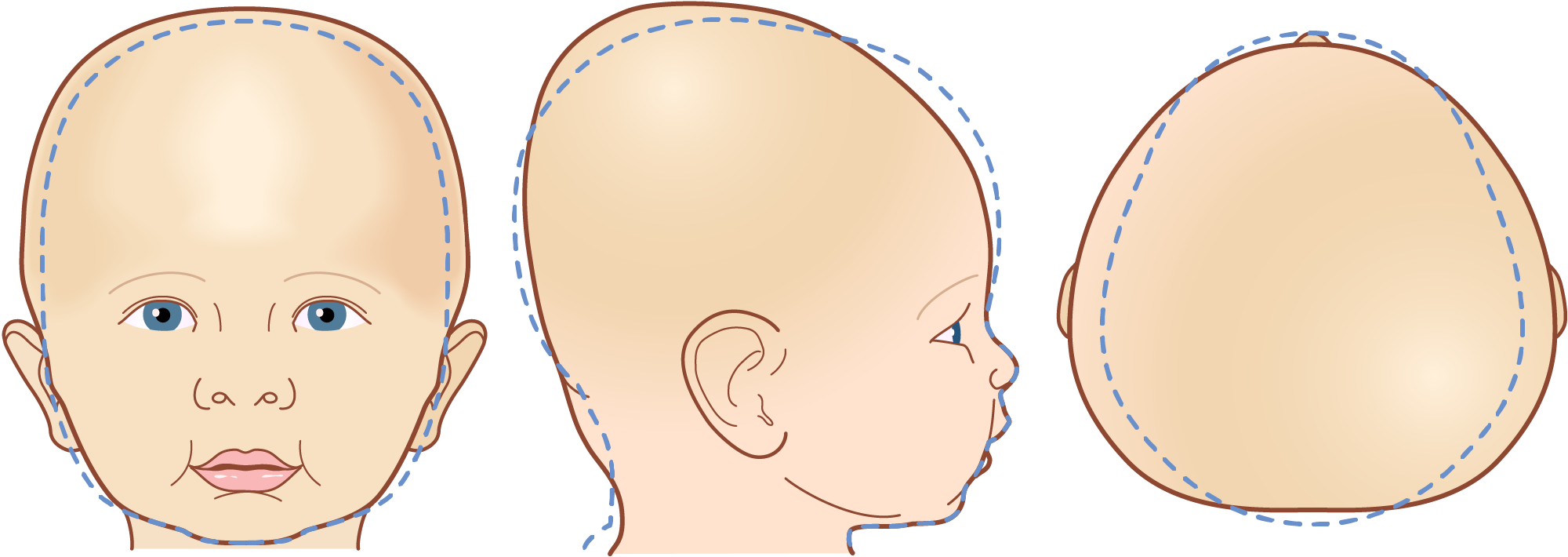
Deformational Brachycephaly
Flattening across the back of the head
Deformational brachycephaly occurs when the back of the head becomes evenly flattened, causing the head to appear wider and shorter than typical. Unlike plagiocephaly, the head is generally symmetrical from left to right, but increased width can change the overall head shape. Early treatment helps encourage growth toward the back of the head while restoring a more proportionate shape.
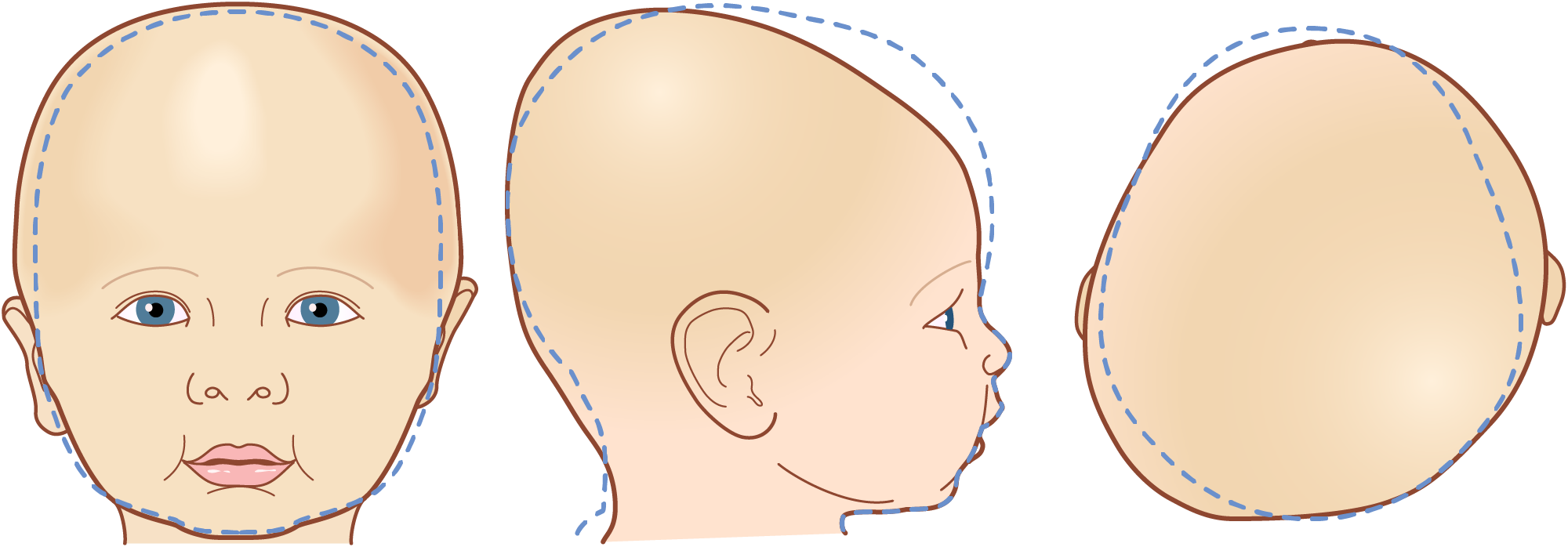
Asymmetrical Brachycephaly
A combination of width and asymmetry
Asymmetrical brachycephaly combines features of both plagiocephaly and brachycephaly. The back of the head is flattened, making the head appear wider, while one side is more affected than the other, creating noticeable asymmetry. Treatment focuses on improving both head width and overall symmetry at the same time.
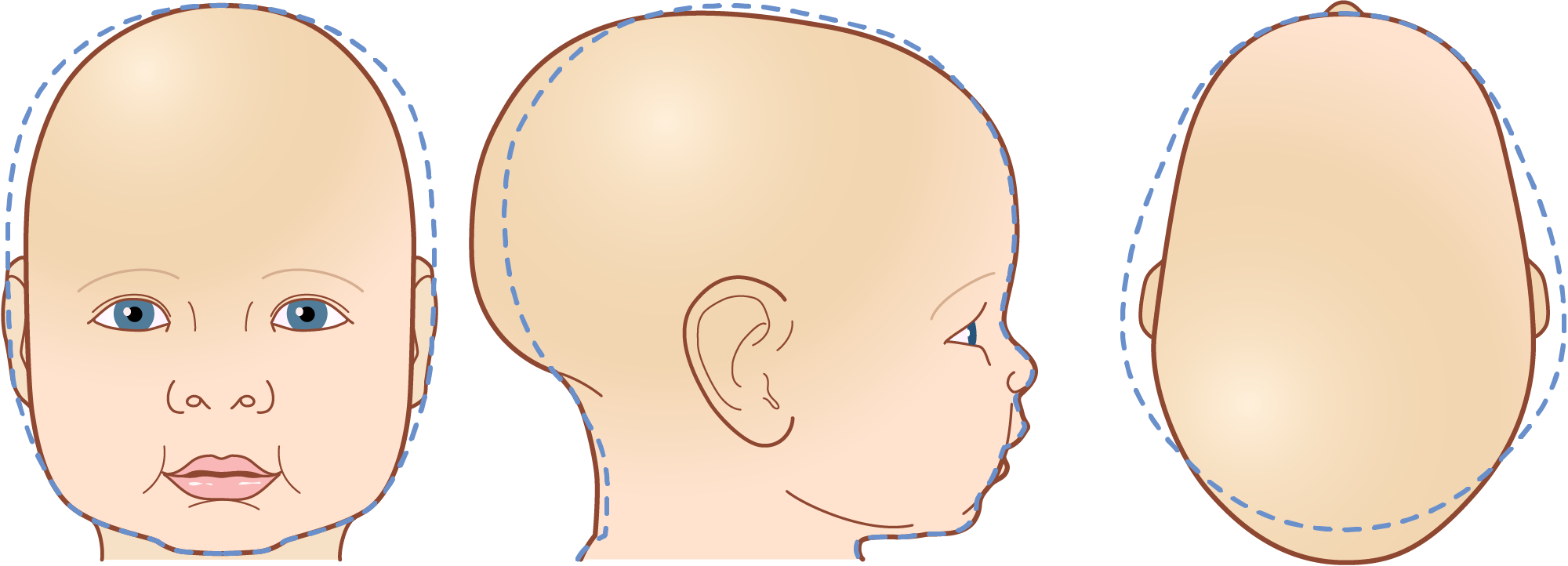
Deformational Scaphocephaly
A long, narrow head shape
Deformational scaphocephaly is less common and is characterized by a head that appears longer from front to back and narrower from side to side. This shape often develops from prolonged positioning that limits side-to-side growth - common in NICU babies. Cranial remolding therapy helps guide growth into the sides of the head to promote a more proportional head shape.
If your child presents with any of one of these four common head shapes, it’s a good idea to have a discussion with your pediatrician. In the first three to four months of age, the first course of action is repositioning and increased tummy time, and you may also be referred to a physical therapist for a stretching and strengthening program.
Not every baby needs a headband! O&P Lab Cranial Care Specialists encourage conservative treatment options such as repositioning and tummy time. These efforts are most effective in very young infants up to about four months of age and can reduce the severity and improve the overall head shape in some cases. Repositioning and tummy time can be discussed with your pediatrician and/or physical therapist. Referrals may be made to the Cranial Care Specialist for a cranial scan or anthropometric measurements to document the current head shape. Over time, another scan or measurement series will compare the changes and determine if a headband (i.e., orthosis) is needed.
Repositioning and Tummy Time
Many babies are born with neck and trunk tightness or weakness that creates positions of comfort or preferred postures. Torticollis is another common condition that is caused by an imbalance of the neck muscles and prevents full turning of the head to both sides. Preferred postures may lead to neck tightness and may increase the time spent in these positions. These situations may be resistant to repositioning and cause the infant some distress during tummy time. It is important to understand that flattening of the head, preferred postures, neck muscle imbalances, resistance to tummy time and repositioning should all be discussed with your pediatrician. Pediatricians and/or physical therapists can monitor changes in your child’s head shape and make recommendations for an orthotic evaluation as needed.
Will my baby need physical therapy?
The exact effects of untreated plagiocephaly are unknown although medical evidence suggests that plagiocephaly should not be considered purely cosmetic. Some of the concerns include: continued skull asymmetry and/or disproportion, facial asymmetry, problems from jaw misalignment presenting in infancy or later, disruptions to visual fields, difficulty fitting eyewear, poorly fitting safety helmets (e.g., bicycle, football, other sports), and neck muscle asymmetry.
What are the risks of untreated head deformities?